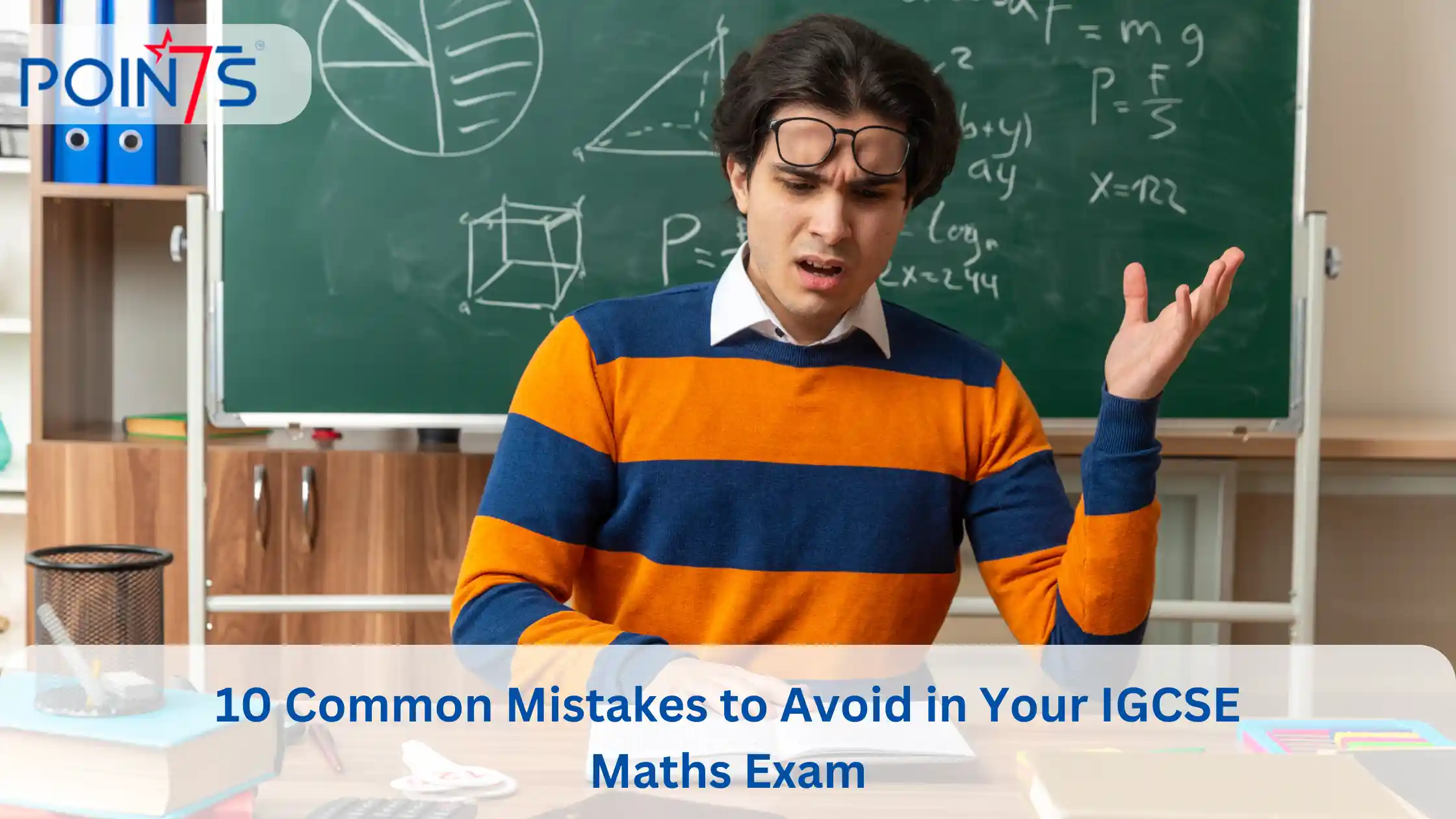
You’ve studied hard, practised plenty of questions, and feel confident that you’re ready for the IGCSE Maths exam. Yet, when results come out, you find yourself disappointed, not because you didn’t understand the content, but because of things you could have avoided. Many students experience this situation. They understand the concepts, but small mistakes, stress, and lack of focus end up costing them marks. But the good thing is that most of these errors are fixable. And once you know how to avoid them, your confidence and scores rise fast.
Let’s read on this blog and break down the 10 most common mistakes students make in the IGCSE Maths exam. You will also get practical IGCSE Maths exam tips you can use right away. Students can think of it as their roadmap to smarter study and better results.
Why Knowing Common Mistakes Matters Before You Start
Doing well in IGCSE Maths exam is not just about learning formulas and methods. Many students enter the exam feeling prepared, but still lose marks because of small, avoidable mistakes. This is why knowing common errors before the exam is just as important as revising topics. When you understand where students usually go wrong, you can slow down, think more clearly, and avoid rushing under pressure.
Using the right IGCSE math exam tips while practising helps you prepare for the exam in a smarter way. It improves how you read questions, manage time, and stay calm during difficult problems. Once these habits become part of your routine, your preparation feels more confident, and your performance in the IGCSE Maths exam improves naturally.
Common IGCSE Maths Exam Mistakes Students Should Avoid
Even well-prepared students lose marks in Maths due to small but avoidable errors. Here are the top 10 mistakes students make in the IGCSE Maths exam and how you can avoid them.
Misreading the Question
Many students rush into solving the moment they see numbers on the page. In doing so, they miss small but crucial words that completely change what the question is asking. Even a single missed instruction can turn a correct method into a wrong answer.
To avoid this, slow down before you start writing. Read the question at least twice and underline words like solve, find, or calculate. Also, break long questions into smaller parts and clearly identify what the final answer should be before attempting the solution.
Using the Wrong Formula
Students often remember formulas but struggle to decide which one fits the question. Under exam pressure, similar-looking formulas are easily confused, which leads to incorrect answers even when the topic is familiar.
The best fix is regular, structured practice. Keep formulas organized by topic and focus on understanding what each one represents. When solving a question, pause for a moment and think about why a particular formula applies before using it.
Sloppy or Incorrect Calculations
Careless calculation errors are one of the most frustrating ways to lose marks. A correct method can still lead to a wrong answer because of a missed sign, a decimal error, or rushing through steps.
Students should follow this IGCSE Maths exam tip: write neatly and step by step to prevent this mistake. Follow BODMAS carefully and double-check your arithmetic before moving on. Also, taking a few extra seconds to review calculations can save valuable marks.
Not Showing Your Work
Many students assume that only the final answer matters. In reality, examiners need to see how you arrived at that answer in order to award marks, especially if the final result is incorrect.
Always show your working clearly. For this, write each algebraic step, include intermediate calculations, and label diagrams properly. Treat working as an essential part of your answer, not something optional.
Ignoring Units
Units often get overlooked in the rush to finish a question. Even when the maths is correct, missing or incorrect units can result in lost marks.
So, you just have to follow this IGCSE Maths exam tip that says you need to pay attention to units right from the start. Highlight them in the question, convert all measurements to the same unit before calculating, and always include the correct unit in your final answer. A quick unit check at the end can prevent easy mistakes.
Over-Dependence on a Calculator
While calculators are helpful, relying on them in the IGCSE Maths exam for simple calculations can slow you down and increase the chance of input errors. Some students also lose confidence in their basic maths skills.
Strengthen your mental maths by practising non-calculator questions regularly. Use the calculator only when calculations are complex, and always check that you’ve entered values correctly before trusting the result.
Leaving Questions Blank or Panicking
Facing a difficult question can trigger panic, causing students to skip it entirely. Leaving questions blank means losing marks that could have been earned through partial working.
Start with questions you feel comfortable answering to build confidence. If you get stuck, write down any steps, formulas, or diagrams you know. Even partial working can earn marks, and you can return later with a clearer mindset.
Poor Time Management
Spending too much time on one question often leads to rushing through the rest of the paper. This increases stress and results in careless errors or unanswered questions.
Practising full papers under timed conditions helps you develop a steady pace. Allocate time based on marks, scan the paper briefly before starting, and leave tougher questions for later if needed.
Lack of Confidence and Exam Anxiety
Even well-prepared students can struggle when nerves take over. Anxiety affects focus and leads to second-guessing, which wastes time and lowers accuracy.
Confidence grows with regular practice. Stay calm using deep breathing, trust the preparation you’ve done, and focus only on the question in front of you instead of worrying about the entire paper.
Not Practising with Past Papers
Students who rely only on textbooks often feel unprepared on exam day. Textbook questions don’t always reflect the style or structure of real exam papers.
Practising past papers helps you understand question patterns and marking schemes. Work through papers from previous years under exam conditions, review your mistakes carefully, and repeat similar questions until you feel confident.
Extra Boost: How Points Edulab Helps You Succeed in IGCSE Maths
Preparing for the IGCSE Maths exam can feel confusing when you’re not sure where you’re losing marks. This is where Points Edulab, a dedicated coaching centre for Maths exam preparation, makes a real difference. Instead of focusing only on long study hours, Points Edulab helps students build strong habits that lead to steady improvement.
One of their key approaches is daily quick practice. With IGCSE tutor guidance, students track common errors and review them weekly, helping them understand patterns and fix gaps early.
Points Edulab also encourages guided group problem sessions for Maths exam preparation, where students explain solutions to others. Through personalized support and exam-focused strategies, Points Edulab helps students approach the IGCSE Maths exam feeling prepared, confident, and in control.
Conclusion
Maths can feel overwhelming as exam day approaches, but most lost marks come from avoidable mistakes, not lack of ability. With consistent Maths exam preparation, smart habits, and the right IGCSE Maths exam tips, you can walk into your exam feeling calm, confident, and ready to perform at your best. Also, small changes in how you read, practise, and manage time can make a big difference to your final score. Points Edulab can guide you in your IGCSE journey as a trusted coaching centre for IGCSE tutoring. We have successfully guided 5000+ students with focused teaching and exam-oriented preparation.